Your First Ice Bath: A Beginner’s Guide (How Long, How Cold, How Often)
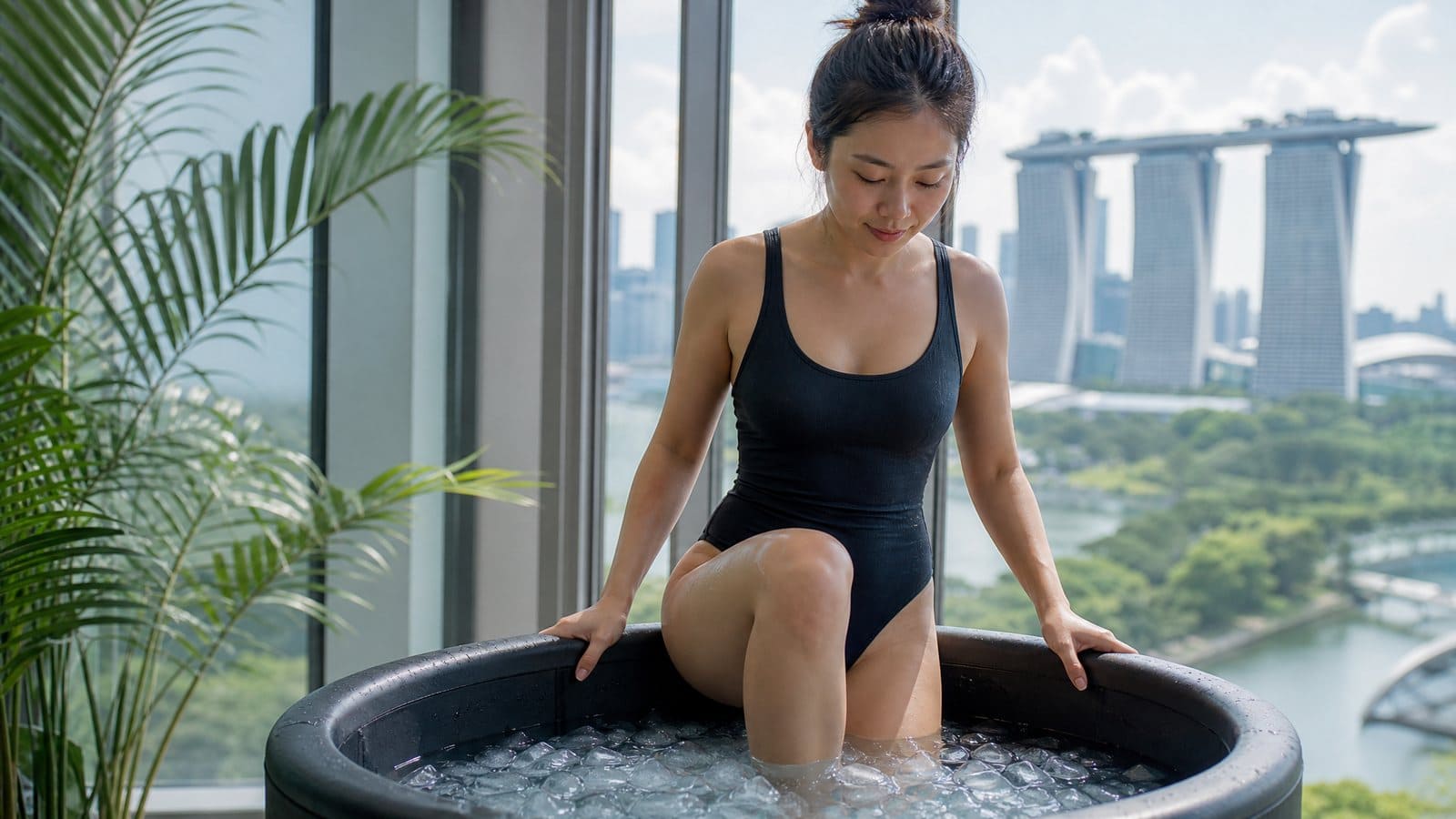
Your first ice bath feels dramatic because your body treats it as an emergency. It is not. Almost everything alarming in the first thirty seconds is the cold shock response, and it fades fast with practice. This guide walks you through exactly what to do before, during, and after, how long and how cold to go as a beginner, and how the whole thing changes in tropical Singapore.
The short answer
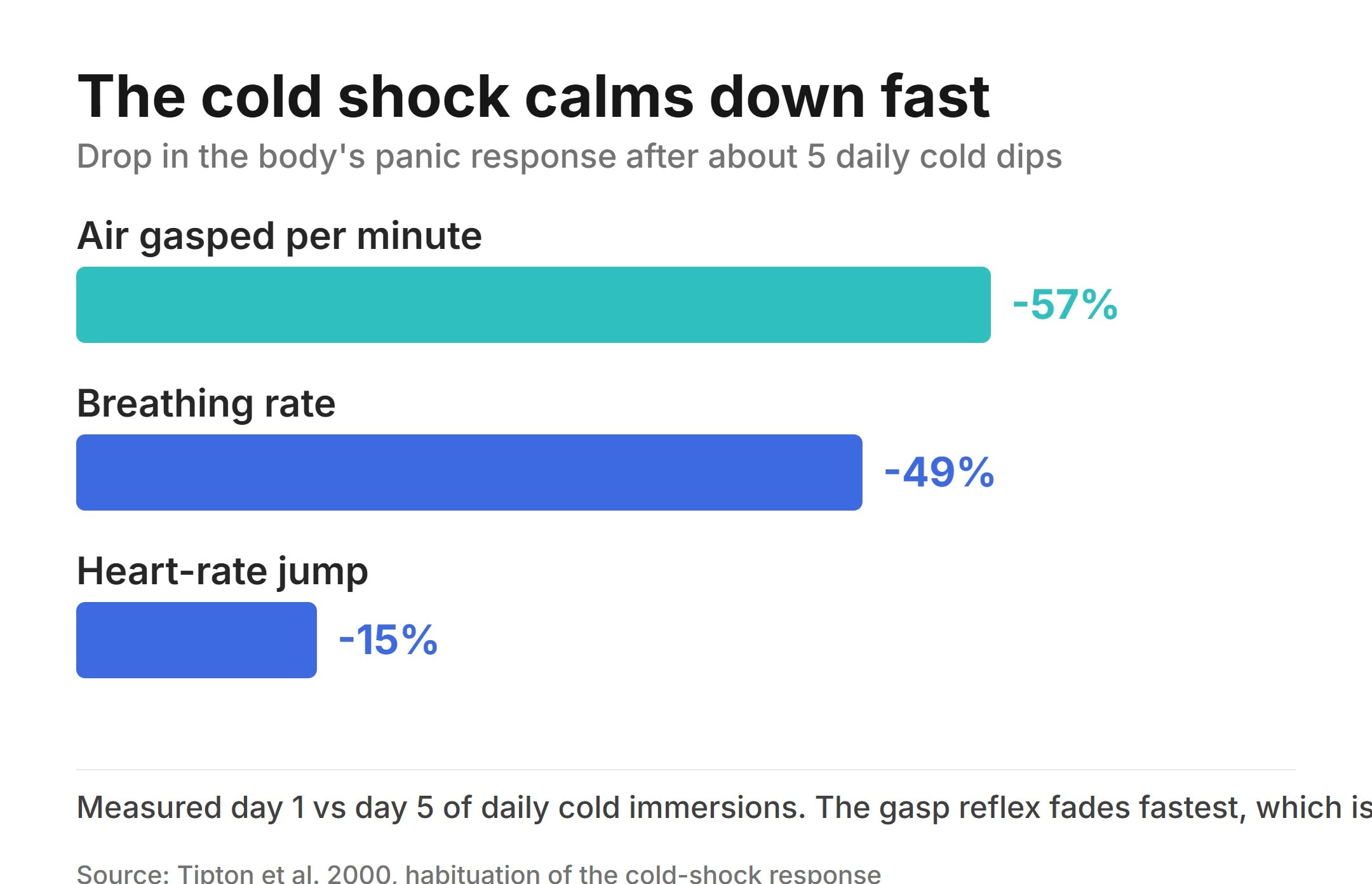
Start small: 30 seconds to 2 minutes in water around 10 to 15 C, and build toward roughly 11 minutes of total cold per week across a few sessions. The thing to manage on your first plunge is the cold shock response, the involuntary gasp and the surge in heart rate and breathing that peaks in the first 30 seconds. You control it by staying calm and breathing slowly, not by going colder or longer. It calms down quickly with practice, usually within the first handful of sessions.
In this article
You’re standing at the edge of a pool that’s colder than anything you’ve voluntarily touched. Your brain is listing reasons to leave. Your body is already bracing. And somewhere behind the anxiety is the question every beginner actually needs answered: what is going to happen to me in there?
This guide answers that question , not vaguely, but second by second. We’ll walk through exactly what your body does when it hits cold water, what the worst moment feels like and how long it lasts, what to do before you get in, what to do after you get out, and how often the research says you should actually do this to get the benefits without overdoing it. And because you’re in Singapore, we’ll cover the specific ways tropical heat changes the experience.
No hype. No “just push through it.” Just the information that makes a first plunge manageable instead of miserable.
How do you prepare for your first ice bath?
Don’t plunge on an empty stomach , low blood sugar plus cold stress is a recipe for dizziness. Don’t plunge on a full stomach either , blood is diverted from digestion during cold immersion, and you’ll feel nauseous. The sweet spot: a light meal 1-2 hours before. In Singapore, this also means hydrating well. Between the ambient humidity and the cold-induced diuresis (cold water makes you need to pee), you want to arrive well-hydrated, not running on kopi alone.
Most Singapore social bathhouses (Ice Bath Club, REVA, Sochill) provide swimwear and towels , you can walk in off the street. If you prefer your own, wear whatever you’d swim in. Bring dry clothes to change into afterward. Leave jewellery and watches at home or in a locker , metal conducts cold and will bite.
The single most important thing you can do before entering cold water is practice controlled breathing for 2 minutes. This isn’t optional mindfulness fluff , it directly governs how intense the cold shock response feels.
Try box breathing: inhale through your nose for 4 seconds, hold for 4 seconds, exhale through your mouth for 4 seconds, hold for 4 seconds. Repeat 6-8 times. This activates your parasympathetic nervous system (the calm branch) before you hit the cold, giving you a head start against the gasping reflex.
When you enter the water, your only job is a slow, controlled exhale. The cold will make you want to gasp , a sharp inhale. Override it. Exhale first, slowly, through pursed lips. This is the technique that separates a panicked first plunge from a composed one.
Set a specific, achievable target: “I will stay in for 60 seconds.” Not “as long as I can” , that invites negotiation with yourself in the moment. A fixed time removes the decision. You get in, you count to 60 (or set a timer), you get out. Done. You can always go longer next time.
Most beginners worry about the cold. The actual challenge is the anticipation , the 30 seconds of standing at the edge, imagining how bad it will be. Once you’re in, your body takes over and the experience is far more manageable than your imagination predicted. The gap between anticipation and reality is the biggest surprise of every first-timer.
What happens during your first ice bath, second by second?
Here’s what actually happens to your body from the moment you step in. This is based on the well-documented physiology of the cold shock response , the same sequence every human experiences, whether it’s your first plunge or your hundredth.
The moment cold water hits your skin, thermoreceptors fire and trigger an involuntary gasp reflex. Your heart rate spikes. Your breathing becomes rapid and shallow. Adrenaline floods your system. This is your sympathetic nervous system slamming into gear , the same “fight or flight” response you’d feel if a car swerved toward you. It feels intense. It is intense. But it’s also completely normal and it’s already peaking.
This is the hardest window. Your body is still in full alarm mode. Muscles tense. Skin burns. Your brain is screaming “get out.” This is where controlled breathing matters most , slow exhales, in through the nose, out through the mouth. Focus on one breath at a time, not the clock. If you can get through these 20 seconds, you’ve passed the peak. Everything after this gets easier.
Something changes. The acute panic subsides. Your breathing slows toward something more controlled. The burning sensation softens into a deep, dull ache, then a kind of numbness. You’re still very aware you’re cold , but you’re no longer in crisis mode. Your body has begun adapting. Many first-timers describe this as the moment they realise: “Oh. I can actually do this.” Norepinephrine and dopamine are rising.
Your heart rate settles. Your breathing is close to normal. The numbness in your skin has replaced the burning. Some people feel a surprising sense of clarity , a sharpness of focus that wasn’t there before. This is norepinephrine and dopamine reaching elevated levels. The cold hasn’t changed. Your nervous system’s response to it has. This is habituation happening in real time.
For most beginners, 2-3 minutes is the ideal exit point. You’ve triggered the full neurochemical cascade , dopamine, norepinephrine, endorphins , without pushing into diminishing returns. Extremities (fingers, toes) will feel very cold. Core temperature is still normal. If you feel sharp pain (not dull ache), uncontrollable shivering, dizziness, or confusion , get out immediately. Otherwise, you’re in the zone. Exit when your timer goes off.
Step out slowly (cold makes you clumsy , grip something stable). As your body rewarns, blood vessels dilate and warm blood floods back into your extremities. This is when most people feel it: a wave of warmth, energy, and a lift in mood and energy. In one small study, cold immersion raised dopamine by around 250%, though that was measured after a full hour in the water, not a short beginner dip, so treat the glow as real but individual. This is the payoff.
What should you do after your plunge?
Resist the urge to jump into a hot shower immediately. Research from Dr. Susanna Søberg suggests that allowing your body to rewarm on its own , through gentle movement and natural shivering , enhances brown fat activation and metabolic benefits. Towel off, put on warm clothes, and move around. In Singapore’s heat, natural rewarming happens fast , you’ll feel warm within 5-10 minutes.
If you shiver, let it happen. In mice, shivering drives the release of succinate that accumulates in brown fat and boosts its heat production. The same metabolic training effect is inferred in humans, though it has not been shown directly. It’s not a sign that something is wrong , it’s your body doing exactly what it should.
If you’re doing contrast therapy (alternating hot and cold), end on cold rather than hot. Going from ice bath directly to a very hot pool causes rapid vasodilation that can make you lightheaded. If you do contrast cycles, return to cold for at least 30 seconds at the end.
Some people feel slightly spaced out or euphoric for 10-15 minutes after their first plunge. Wait until you feel fully present before driving, cycling, or operating anything that requires sharp reflexes.
How often should a beginner ice bath?
This is the question everyone asks , and the honest answer is simpler than the internet makes it seem.
What does that look like in practice?
The honest caveat: more is not always better. Longer sessions and colder temperatures produce diminishing returns beyond 5 minutes for most people. Dr. Mike Tipton, a leading cold water physiologist, has specifically cautioned against the “colder and longer” mentality. The benefits plateau. The risks don’t.
And if you’re strength training: avoid cold immersion for at least 4 hours after hypertrophy-focused workouts. The anti-inflammatory effect of cold exposure can blunt the muscle-building signals your body needs. Plunge on rest days or in the morning, not immediately after lifting. (We cover the full timing protocol in our Athletic Recovery guide.)
Does tropical Singapore heat change how you cold plunge?
Cold plunging in Singapore is not the same as cold plunging in Stockholm. The ambient temperature of 30-32°C year-round creates conditions that are unique in the global cold plunge scene.
The contrast is more extreme. Stepping from 32°C outdoor heat into a 5°C pool is a 27°C temperature delta , more than most people in temperate climates will ever experience. This makes the cold shock response sharper and the neurochemical response stronger. First-timers in Singapore often report a more intense “rush” afterward than visitors from cooler countries.
Dehydration is a real factor. Singapore’s humidity means you’re likely losing more water through sweat than you realise, especially if you’ve walked, trained, or spent time outdoors before your session. Cold-induced diuresis (the immediate urge to urinate when you hit cold water) adds to fluid loss. Arrive well-hydrated. Drink water before and after , not just kopi.
You rewarm faster. In Singapore, post-plunge rewarming happens naturally within 5-10 minutes because the ambient temperature does the work. In winter-climate countries, this same process takes 20-30 minutes. The practical benefit: shorter total session time, including recovery.
Morning is ideal. Before the day heats up, a 6-7 AM plunge creates a “metabolic anchor” , the norepinephrine and dopamine elevation carries through your morning. Evening plunges work too but may delay sleep onset due to the adrenaline spike. If you plunge in the evening, finish at least 3 hours before bed.
What is a realistic 30-day beginner progression?
Here’s a practical plan that takes you from “I’ve never done this” to “this is part of my week.” No heroics required.
Visit a Singapore venue with guided coaching or multiple temperature pools. Do one session. Start at 10-12°C. Stay for 30-60 seconds. Focus entirely on breathing. Exit. Notice how you feel 30 minutes later. That’s the hook.
Go twice. Same temperature. Aim for 60-90 seconds each time. You’ll notice the cold shock is already slightly less intense than the first session , that’s your nervous system beginning to habituate. After this week, you’ve done enough for your brain to start recognising the pattern.
Twice per week, 2-3 minutes. If you started at 12°C, try moving to 8-10°C. You’re now in the window where the habituation research shows measurable cold shock reduction , after 4 sessions, the gasping reflex and heart rate spike are significantly blunted. By the end of this month, the plunge will feel like a choice, not a crisis.
Cold water immersion is not suitable for everyone. Do not plunge if you have: uncontrolled cardiovascular disease, uncontrolled hypertension, Raynaud’s disease, cold urticaria, epilepsy, or are pregnant. If you have any chronic health condition, consult a physician first. Never plunge alone in an unsupervised setting. If you feel sharp pain (not dull ache), confusion, extreme dizziness, or uncontrollable shivering, exit immediately.
Frequently asked questions
How long should a beginner stay in an ice bath?
Start with 30 seconds to 2 minutes. Most beginners find 2 to 3 minutes is a sensible ceiling once they are used to it. The goal is to trigger the response and stay calm through it, not to endure as long as possible. Going longer adds risk without much extra benefit.
How cold should my first ice bath be?
Around 10 to 15 C is a good beginner range: cold enough to trigger a real response, not so cold that it becomes unsafe or overwhelming. Consistency at a manageable temperature beats chasing extreme cold.
How often should I ice bath as a beginner?
Aim for roughly 11 minutes of total cold exposure per week, split across two to four short sessions. That is a widely cited floor, not a maximum, and spreading it across sessions is better than one long plunge.
What is the cold shock response?
It is the involuntary gasp and the surge in heart rate and breathing you feel in the first 30 seconds of cold water. It is normal and it is the main thing to control, by breathing slowly and staying still. It calms down noticeably within the first handful of sessions.
Should I warm up with a hot shower afterward?
Not immediately. Letting your body rewarm on its own through gentle movement and a little shivering is thought to support the metabolic benefit. Towel off, put on warm clothes, and move gently. Save the hot shower for later if you want one.
Start controlled, not extreme
The best first ice bath is one you can repeat, at a temperature you actually chose rather than whatever a bag of ice happened to produce. The Vitalis 3 holds any set point from 2 to 40°C, so you can start gentle, stay consistent, and lower the temperature only when you are ready.
- Sramek P, Simeckova M, Jansky L, Savlikova J, Vybiral S (2000). Human physiological responses to immersion into water of different temperatures. European Journal of Applied Physiology 81(6):436-442. doi.org/10.1007/s004210050065
- Soberg S, Loften J, Christensen JF, et al. (2021). Altered brown fat thermoregulation and enhanced cold-induced thermogenesis in young, healthy, winter-swimming men. Cell Reports Medicine 2(10):100408. doi.org/10.1016/j.xcrm.2021.100408
- Tipton MJ, Mekjavic IB, Eglin CM (2000). Permanence of the habituation of the initial responses to cold-water immersion in humans. European Journal of Applied Physiology 83(1):17-21. pubmed.ncbi.nlm.nih.gov/11072768/
- Mills EL, Pierce KA, Jedrychowski MP, et al. (2018). Accumulation of succinate controls activation of adipose tissue thermogenesis. Nature 560:102-106. doi.org/10.1038/s41586-018-0353-2