Ice Baths for Athletic Recovery
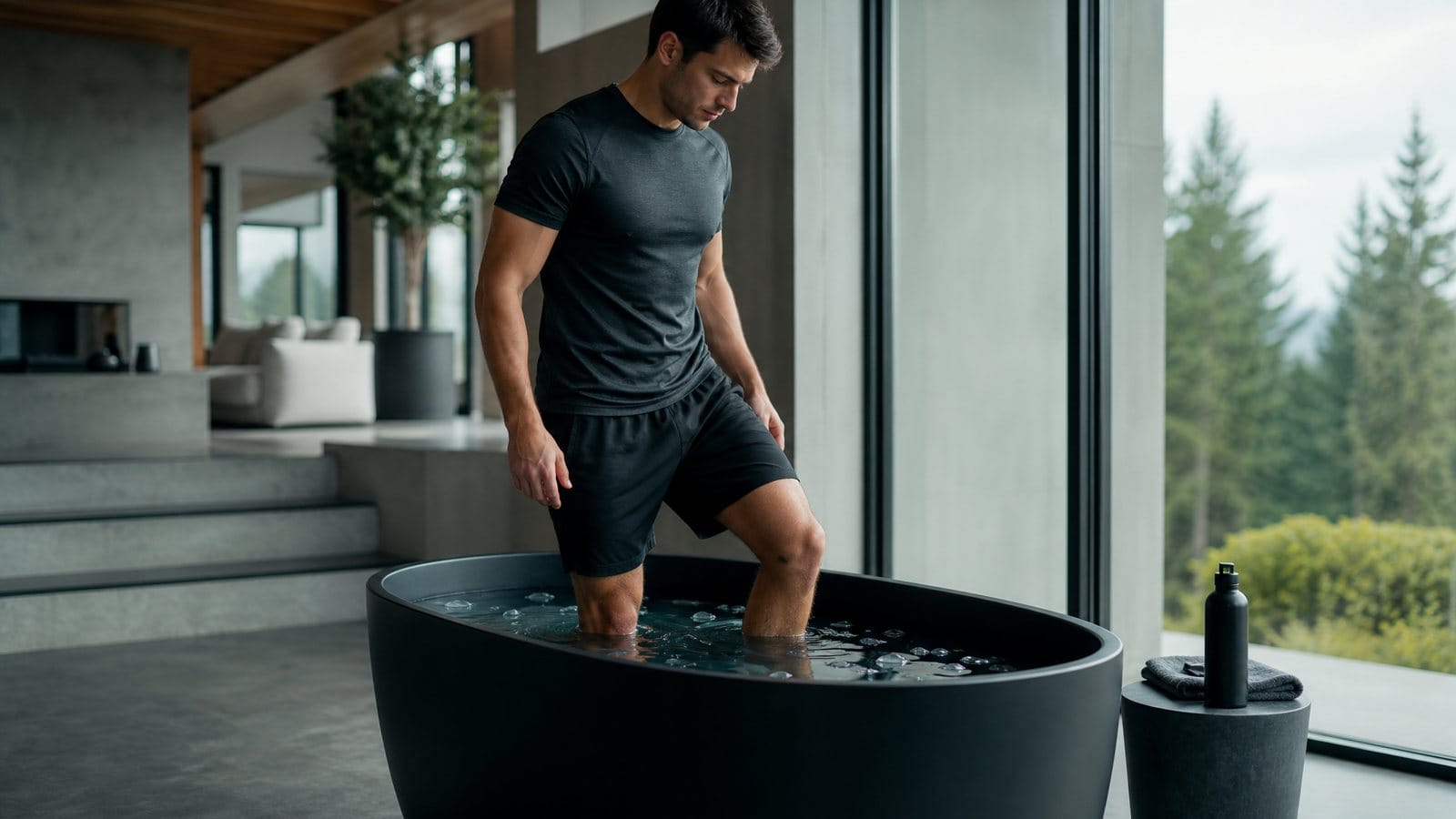
Ice baths are the recovery ritual of choice for athletes from the NBA hardwood to the local CrossFit box, and the next-morning relief is real. But the same cold that soothes your legs can quietly work against the reason you trained them. The honest answer turns less on whether ice baths work than on when you use them. Here is what the evidence actually shows.
The short answer
Yes, ice baths speed up next-day recovery and reduce muscle soreness, best at 10 to 15°C for 10 to 15 minutes within an hour or two of hard exercise. The catch: used right after strength training, cold water can blunt muscle growth, so on days built around getting bigger or stronger, keep the plunge several hours away from lifting. For endurance training there is no such trade-off. The honest rule is to periodise: recover for performance when performance is the goal, and train for adaptation when adaptation is the goal.
| Goal | Temperature | Duration | Timing |
|---|---|---|---|
| Reduce soreness (DOMS) | 11 to 15°C | 10 to 15 min | Within 1 to 2 h after exercise |
| Restore next-day power | 5 to 10°C | 10 to 15 min | After the session |
| Building muscle | Keep cold away from lifting | n/a | Separate by several hours |
| Endurance training | 10 to 15°C | 10 to 15 min | Any time, no trade-off |
In this article
- Do ice baths help muscle recovery?
- Do ice baths blunt muscle growth?
- How do ice baths affect muscle growth?
- When are ice baths worth it for recovery?
- Are ice baths bad for endurance athletes?
- Do ice baths hurt trained athletes in practice?
- When should athletes use ice baths?
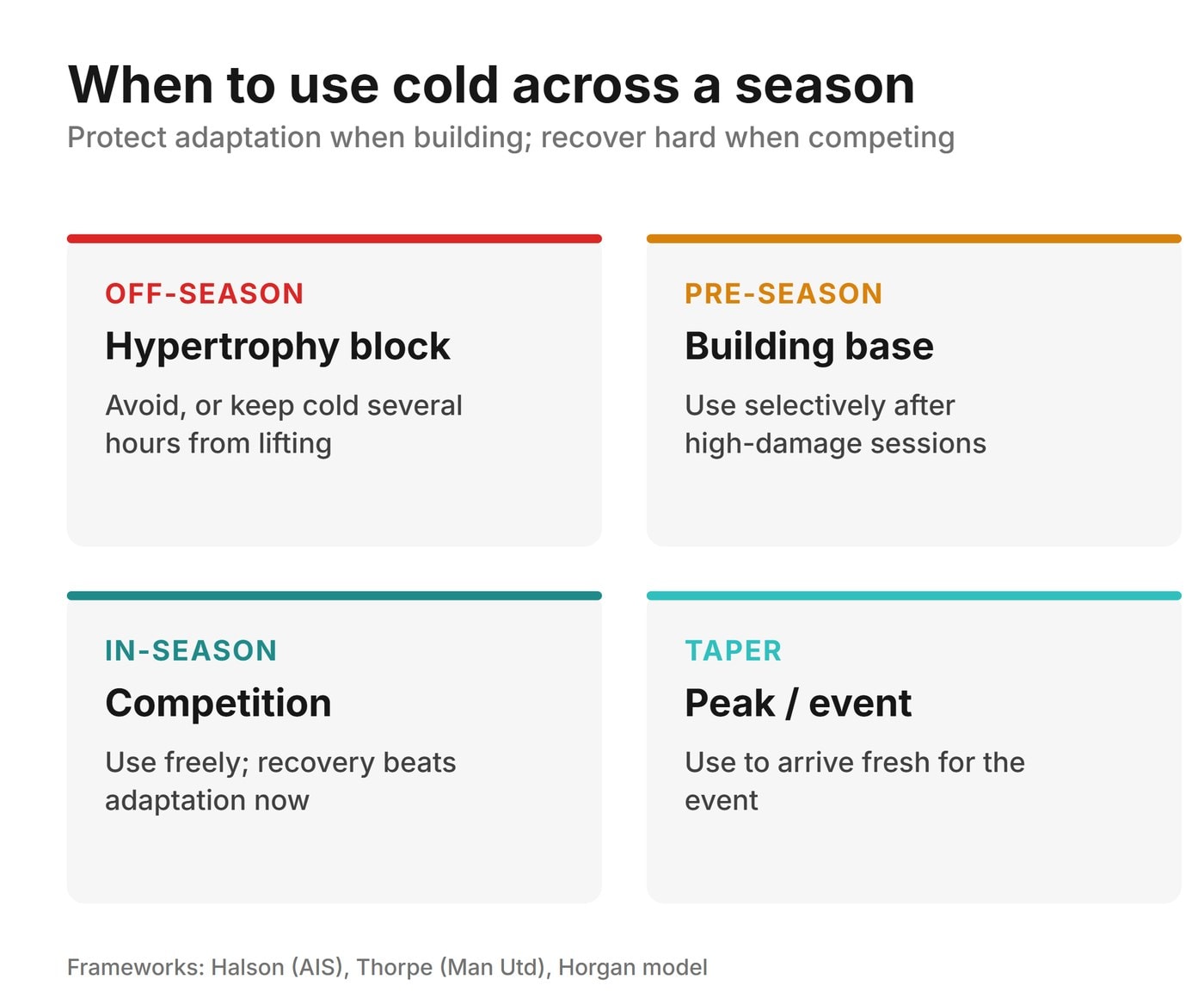
- How to use ice baths through a training season
Do ice baths help muscle recovery?
First, the obvious: cold water immersion works for acute recovery. This isn’t controversial and it isn’t close. Five meta-analyses published between 2016 and 2025 all arrive at the same conclusion, and the most recent is the most definitive.
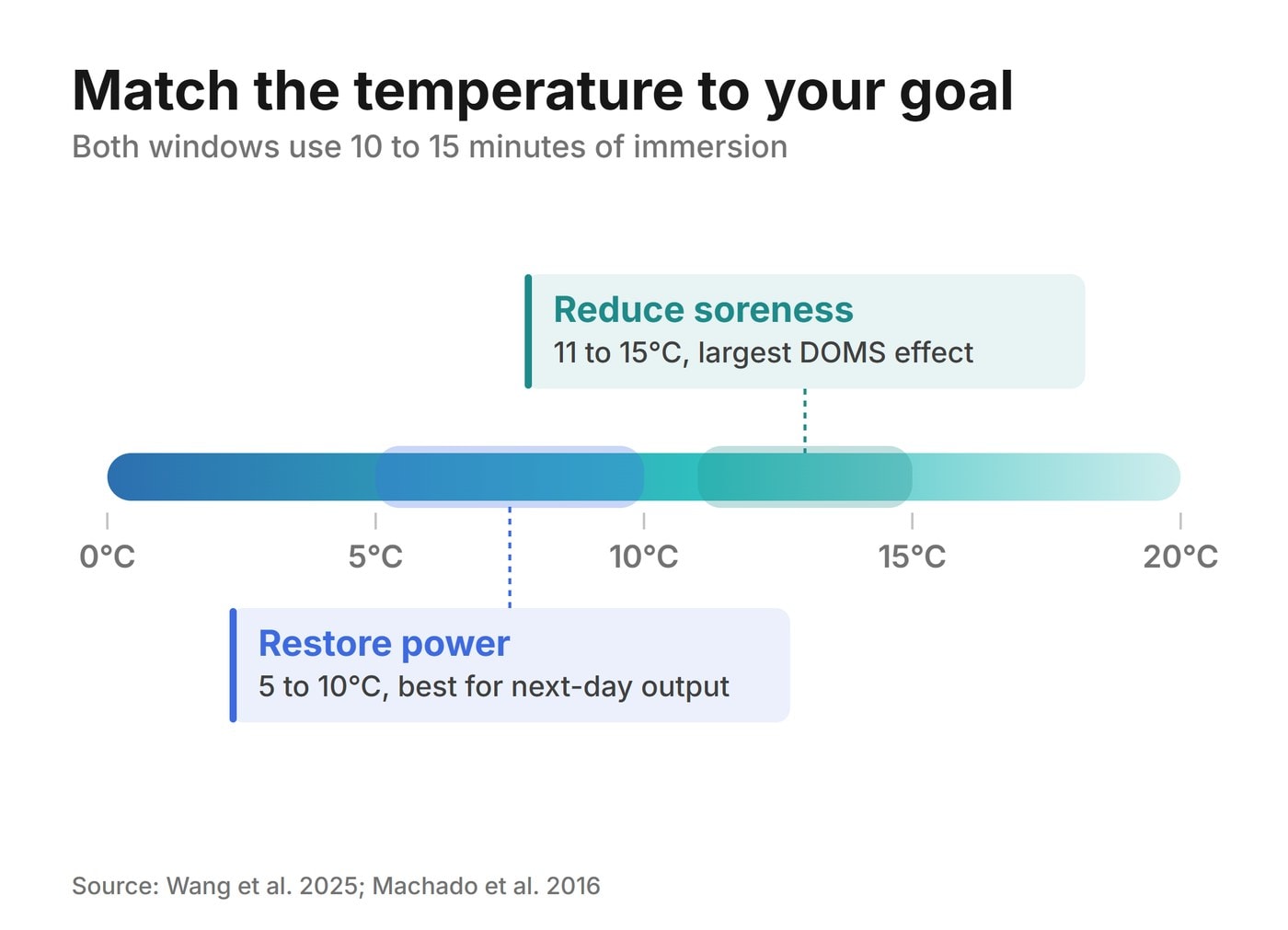
Wang, Wang, and Pan published a network meta-analysis in 2025, 55 randomized controlled trials, and found that 10-15 minutes of immersion at 11-15°C produced the largest reduction in delayed-onset muscle soreness of any protocol tested, with an effect size of −1.45. That’s a large effect by any standard. In plainer terms: you go in sore, you come out meaningfully less sore, and the difference persists for days.
A separate meta-analysis by Moore and colleagues, 52 studies, the largest to date, found that cold water immersion after high-intensity exercise improved muscular power at 24 hours, enhanced perceived recovery, and lowered creatine kinase, a blood marker of muscle damage. Xiao et al., looking at 20 studies, reported immediate reductions in both soreness and perceived exertion.
The numbers aren’t in dispute. If your only goal is to feel better and perform better tomorrow, an ice bath after hard exercise is one of the most reliable tools available. But here’s where the story gets interesting, because tomorrow isn’t the only day that matters.
Do ice baths blunt muscle growth?
In 2015, Llion Roberts and his colleagues at the University of Queensland published a study in the Journal of Physiology that should have changed how every gym-goer thinks about ice baths. It didn’t get the attention it deserved, partly because the result was so uncomfortable for people who’d built ice baths into their identity.
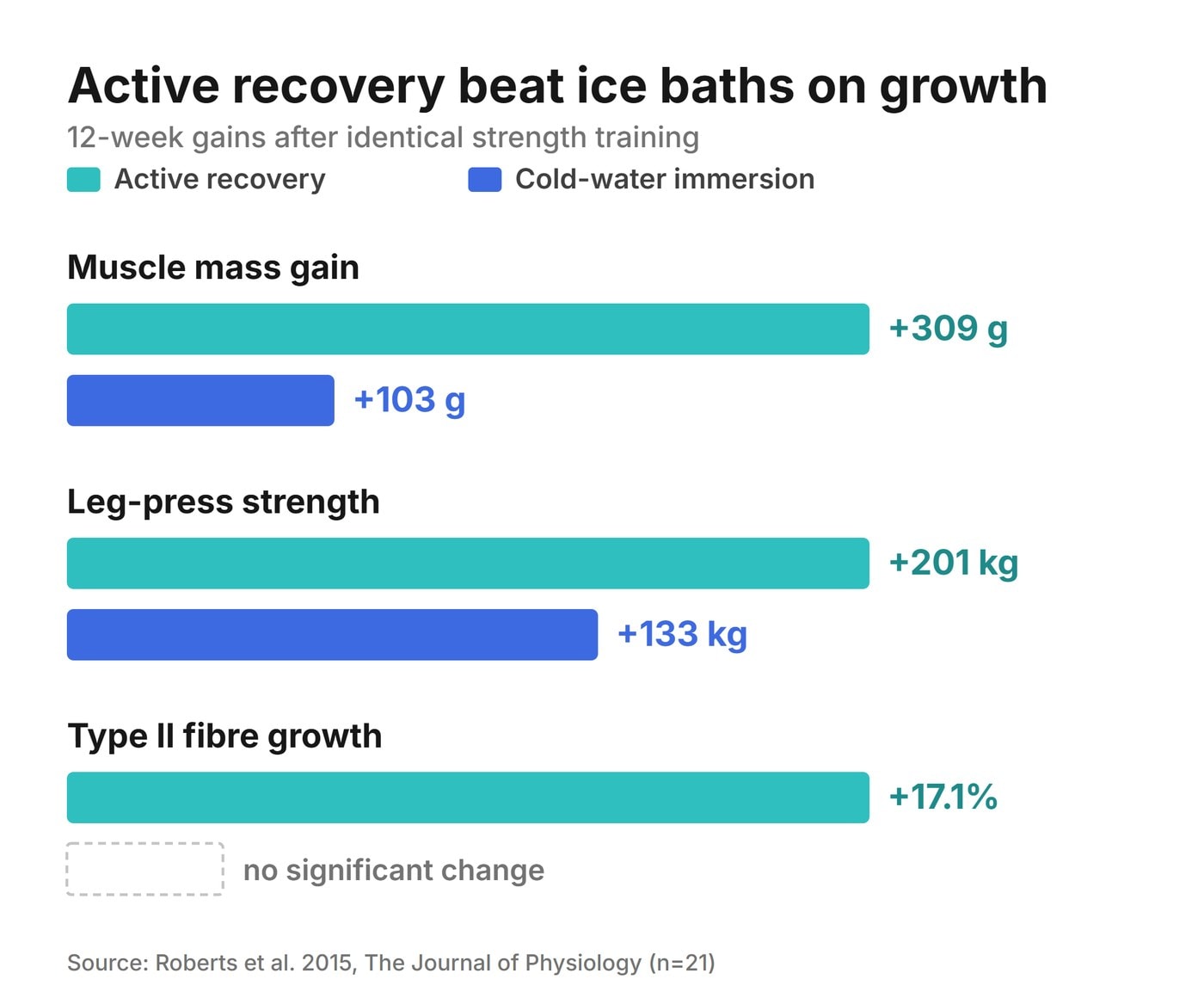
Roberts took 21 resistance-trained men and put them through 12 weeks of lower-body strength training, leg press, extensions, lunges, plyometrics, twice a week. After every session, half the group sat in 10°C water for 10 minutes. The other half did 10 minutes of light cycling.
Twelve weeks later, they measured everyone’s quadriceps with MRI.
The findings went deeper than total mass. Type II muscle fibers, the fast-twitch fibers responsible for power and explosiveness, grew 17% with active recovery and showed no significant change with cold water. The number of myonuclei per fiber, a marker of lasting muscle remodeling capacity, increased 26% in the control group with no change in the ice bath group. Even 1RM strength gains were significantly greater without cold water.
Fyfe et al. replicated this in 2019 with a slightly different design, 7 weeks, whole-body immersion at 10°C for 15 minutes, and found the same selective targeting. Type II fibers were hit hardest, with a large effect size of −1.37. Type I fibers, the slow-twitch endurance fibers, were relatively unaffected. The cold wasn’t suppressing all growth equally. It was surgically undermining the fibers that matter most for strength and power.
Think about that for a moment. The cost of the ice bath falls precisely on the adaptations that strength athletes care about most.
How do ice baths affect muscle growth?
For years, the assumed mechanism went like this: exercise causes inflammation, inflammation causes soreness, ice baths reduce inflammation, therefore ice baths reduce soreness. Simple. Logical. And the second half was supposed to explain the adaptation problem: if ice baths suppress inflammation, and inflammation drives muscle repair, then suppressing it must suppress repair.
Peake et al. tested this directly in 2017, using muscle biopsies from the same participants as Roberts’ study. They measured the full panel of inflammatory markers, neutrophils, macrophages, every relevant cytokine (IL-1β, TNF-α, IL-6, the works). The result was unambiguous: zero difference in intramuscular inflammation between ice bath and active recovery.
Cold water immersion doesn’t blunt muscle growth by reducing inflammation. The inflammatory response inside the muscle is identical whether you ice or not. What cold does interfere with are the anabolic signaling pathways that tell your muscle cells to grow.
Roberts found that satellite cell activation, the deployment of stem-like cells that fuse with damaged fibers and provide new nuclei for growth, was suppressed after cold water immersion. p70S6K phosphorylation, a direct marker of the mTOR pathway that drives protein synthesis, was significantly lower. Fyfe found the same story downstream: rps6 signaling blunted, FOX-O1 (a protein that promotes muscle breakdown) elevated, and heat shock proteins attenuated.
The ice bath isn’t reducing the damage signal. It’s intercepting the build signal.
This distinction matters because it changes the practical question entirely. If the problem were inflammation suppression, you might solve it by timing the ice bath differently or adjusting the temperature. But the problem is that cold directly dampens the molecular machinery of muscle protein synthesis. The repair crew shows up either way, the cold just prevents them from completing the renovation.
When are ice baths worth it for recovery?
If you’ve read this far and you’re ready to concrete over your cold plunge, hold on. The prosecution’s case against ice baths is mechanistically airtight, but it’s also narrow. It applies to a specific context: regular cold water immersion immediately after resistance training, when hypertrophy is the primary goal. Widen the lens and the picture looks very different.
Those five meta-analyses aren’t measuring marginal effects. Moore et al.’s 52-study analysis found CWI reduced soreness with an effect size of −0.89, which is large. Perceived recovery improved (effect size 0.66). Next-day power output was measurably higher. For an athlete who has a match on Tuesday and another on Thursday, those numbers are the difference between performing and surviving.
| Used for building muscle | Used for recovery and performance |
|---|---|
| Satellite-cell activation and mTOR signalling suppressed | Muscle soreness meaningfully reduced |
| Type II (fast-twitch) fibre growth blunted | Next-day power and jump restored |
| Long-term hypertrophy and strength gains reduced | Perceived recovery improved |
| No clear upside during a hypertrophy block | No penalty to endurance adaptations |
The optimal protocol has been identified with unusual precision. Wang et al.’s network meta-analysis found that 10-15 minutes at 11-15°C produces the best soreness reduction, while slightly colder water (5-10°C) optimizes performance recovery and creatine kinase clearance. Machado et al. arrived at the same window independently, 11-15°C for 11-15 minutes, back in 2016. Two different research groups, eight years apart, converging on the same protocol parameters.
Are ice baths bad for endurance athletes?
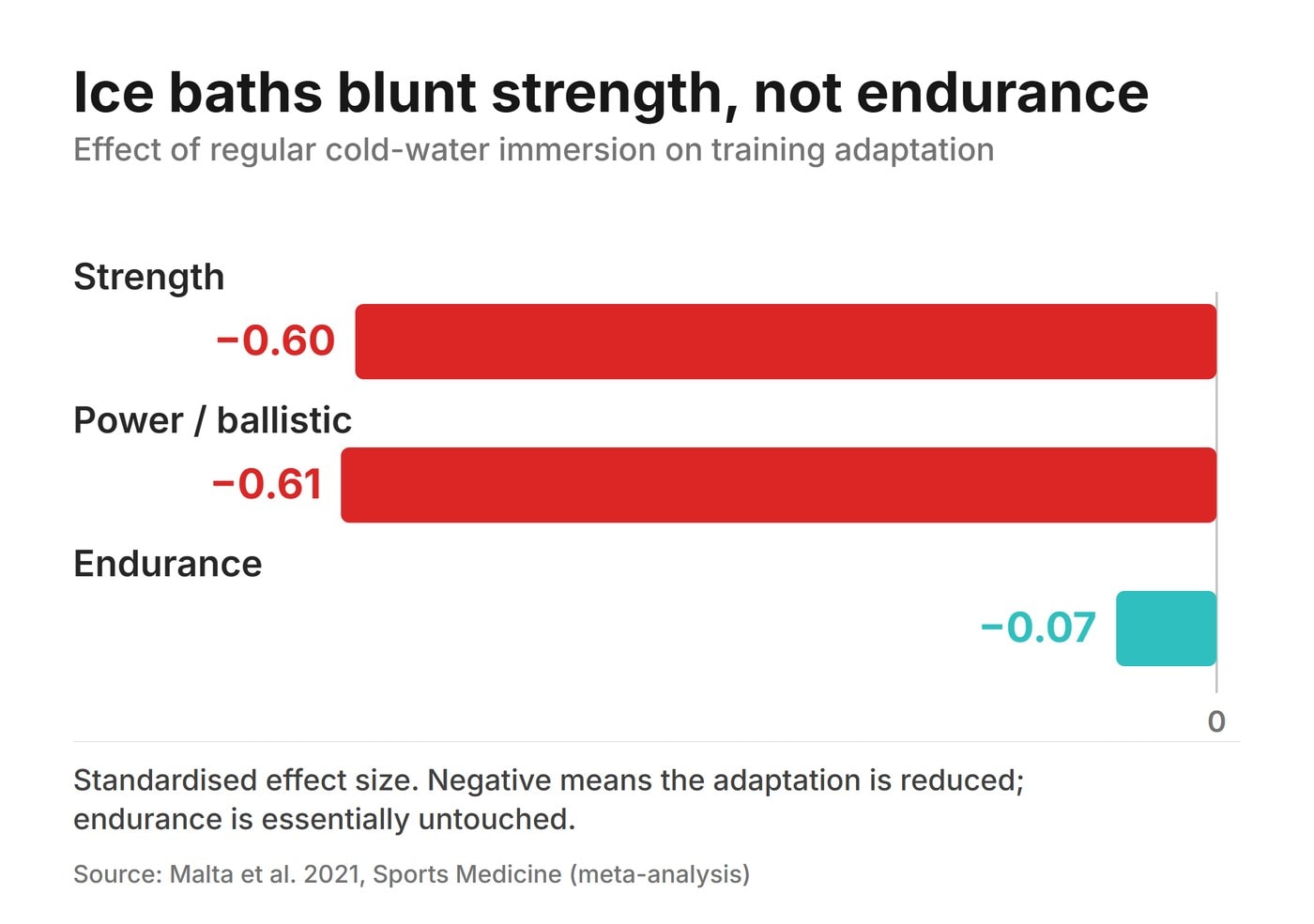
Malta et al. published a meta-analysis in 2021 in Sports Medicine that quietly settled one of the biggest open questions in this field. They separated the data by training type and found that CWI significantly impaired resistance training adaptations, strength (effect size −0.60) and ballistic performance (−0.61). No surprise there.
But for endurance training, the effect was zero. Not small. Not negligible. Zero. Time-trial power: −0.07 (p = 0.71). Time-trial duration: 0.00 (p = 1.00).
Ihsan, Abbiss, and Allan, in their elegantly titled review “Friend, Foe, or Futile?”, explained why this makes biological sense. Cold exposure activates PGC-1α, the master regulator of mitochondrial biogenesis. Regular CWI during endurance training blocks was shown to increase mitochondrial markers, upstream kinases, and skeletal muscle capillarity.
Their proposed mechanism is striking: the reduced fiber size after CWI may actually be compensatory rather than harmful for endurance athletes. Smaller fibers with more capillaries maintain a better oxygen delivery ratio. The thing that hurts strength athletes, less fiber growth, may quietly serve endurance athletes by preserving their oxidative profile.
This means a runner, cyclist, or swimmer can use ice baths freely during training without worrying about long-term adaptation costs. The interference effect is specific to hypertrophy, and only to hypertrophy.
Do ice baths hurt trained athletes in practice?
If Roberts’ lab study is the prosecution’s star witness, Horgan et al. 2023 is the defense’s. And it’s worth understanding why practitioners find it more compelling than the lab data.
Horgan studied 18 academy Super Rugby players, young, highly trained, averaging 98 kg, with at least two years of supervised strength and conditioning. This wasn’t a university lab with recreationally active volunteers. These were professional athletes doing what professional athletes do.
Over 12 weeks, each player rotated through three 4-week blocks: cold water immersion (15°C for 15 minutes), hot water immersion (39°C for 15 minutes), and static stretching as control. All applied after twice-weekly resistance training sessions. All participants received 25 grams of whey protein after training.
The primary finding: total lean mass showed no difference between conditions (p = 0.960). No detectable body composition penalty from cold water immersion. Squat jump performance was equivalent or slightly better in the CWI group compared to hot water.
The study’s authors explicitly reconcile their findings with Roberts: their subjects were highly trained (not recreational), performed concurrent training (not resistance-only), trained in-season (not in a dedicated hypertrophy block), and received post-exercise protein. They note, correctly, that this was the first study to test CWI’s hypertrophy effects in highly trained athletes. And the gap between a controlled lab protocol and real-world sporting practice is substantial.
Roberts showed that cold water immersion can impair hypertrophy under controlled conditions. Horgan showed that in the messy reality of professional sport, where athletes train concurrently, eat properly, and are already highly adapted, the effect may not survive the translation from lab to field. Both findings are valid. The question is which context matches yours.
When should athletes use ice baths?
Recover for performance when performance is the goal. Train for adaptation when adaptation is the goal.
The debate between “ice baths help” and “ice baths hurt” is the wrong debate. It’s like asking whether fertilizer is good or bad for a farm. During the growing season, obviously yes. At harvest, it’s irrelevant. The answer depends entirely on what phase you’re in, and elite sport has already figured this out.
Shona Halson, formerly of the Australian Institute of Sport, frames the core tension clearly: if the inflammatory response drives adaptation, then chronically suppressing it is counterproductive. But if reduced soreness allows higher training quality in the next session, the cumulative stimulus across a training block may be greater with cold than without it. Her research on highly trained cyclists found that cold water immersion during intensified training did not impair adaptation, and may have benefited repeated-sprint ability.
Robin Thorpe, formerly Senior Sports Scientist at Manchester United, developed what’s become the most widely adopted practitioner framework: match the recovery tool to the type of fatigue. Structural damage from matches or plyometrics? Cooling. Metabolic fatigue from strength sessions? Heating or passive recovery. This reframes the question from “CWI yes or no?” to “what kind of tired are we?”
Barry Horgan published a detailed seasonal periodization model with dose tiers calibrated by temperature and duration: 5 minutes at 5°C (severe), 10 minutes at 10°C (moderate), 15 minutes at 15°C (mild). His critical applied insight: the negative findings from lab studies disappear when CWI is applied after sport-specific sessions rather than immediately after resistance training, even in the same athletes doing both in the same week.
The cost of cold water immersion is mechanistically real: suppressed satellite cell activation, dampened mTOR signaling, selectively blunted Type II fiber growth. These are not marginal effects.
The benefit is equally real: meaningful soreness reduction, restored next-day power, enhanced perceived recovery, zero interference with endurance adaptations, and no body composition penalty in trained athletes during competition phases.
Train for adaptation when adaptation is the goal. Recover for performance when performance is the goal. Never confuse the two phases.
How to use ice baths through a training season
Based on the converging evidence from Roberts, Horgan, Malta, Ihsan, and the practitioner frameworks of Halson and Thorpe, here’s how to think about ice baths across a training year. The protocol is straightforward: 10-15 minutes at 10-15°C, adjusted colder or shorter for leaner athletes.
One final nuance worth knowing. A 2024 evidence review by Grainger and colleagues noted that the dampening of strength gains was seen mainly when individual limbs were cooled, not with whole-body immersion. Roberts’ protocol was waist-down immersion. This may partially explain why Horgan’s whole-body protocol showed no body composition penalty. It’s a detail, but for practitioners designing protocols, details like this matter.
A note for training in Singapore. In a climate that sits near 30°C year round, recovery demand runs high and a tub of ice will not hold a stable temperature for a full session. A chiller that holds your exact target, whether that is 10°C for competition recovery or a milder maintenance dose, is what makes periodised cold practical here. Our Vitalis 3 holds any set point from 2 to 40°C, and the running cost for daily use is broken down in what an ice bath costs to run in Singapore.
The ice bath is neither hero nor villain. It’s a tool whose value depends entirely on when you pick it up and what you’re trying to build. Elite sport moved past the binary debate years ago. The evidence says you should too.
Frequently asked questions
How long should an ice bath be for recovery?
About 10 to 15 minutes. For reducing soreness, 11 to 15°C works best; for restoring next-day power, slightly colder water at 5 to 10°C is optimal.
Do ice baths stop muscle growth?
Used immediately after strength training, cold water can blunt the muscle-building signal, and the effect falls hardest on fast-twitch fibres. On days you are training for size or strength, separate the plunge from lifting by several hours, or skip it.
Should I ice bath before or after a workout?
After, when the goal is recovery. Avoid it right after strength work during a muscle-building phase. Cold before a workout is a wake-up tool, not a recovery one.
Are ice baths bad for runners and cyclists?
No. The research shows no measurable penalty to endurance adaptations from cold-water immersion, so endurance athletes can use ice baths throughout their training.
How cold should an ice bath be?
10 to 15°C covers most recovery needs; 5 to 10°C is used when restoring power is the priority. Colder is not automatically better, and below about 5°C the added risk outweighs the benefit for most people.
The right temperature, every time
Periodised cold only works if you can hold a precise, repeatable temperature. The Vitalis 3 holds any set point from 2 to 40°C, so competition-recovery cold and lighter maintenance doses are a dial away, not a bag of ice away.
- Wang H, Wang L, Pan Y (2025). Impact of different doses of cold water immersion on recovery from exercise-induced muscle damage: a network meta-analysis. Frontiers in Physiology 16:1525726. doi.org/10.3389/fphys.2025.1525726
- Moore E, Fuller JT, Buckley JD, et al. (2022). Impact of cold-water immersion compared with passive recovery following strenuous exercise on athletic performance: a systematic review with meta-analysis. Sports Medicine 52. doi.org/10.1007/s40279-022-01644-9
- Xiao F, et al. (2023). Effects of cold water immersion after exercise on fatigue recovery and exercise performance: meta-analysis. Frontiers in Physiology 14:1006512. doi.org/10.3389/fphys.2023.1006512
- Roberts LA, Raastad T, Markworth JF, et al. (2015). Post-exercise cold water immersion attenuates acute anabolic signalling and long-term adaptations in muscle to strength training. The Journal of Physiology 593(18):4285-4301. doi.org/10.1113/JP270570
- Fyfe JJ, Broatch JR, Trewin AJ, et al. (2019). Cold water immersion attenuates anabolic signaling and skeletal muscle fiber hypertrophy, but not strength gain, following whole-body resistance training. Journal of Applied Physiology 127(5):1403-1418. doi.org/10.1152/japplphysiol.00127.2019
- Peake JM, Roberts LA, Figueiredo VC, et al. (2017). The effects of cold water immersion and active recovery on inflammation and cell stress responses in human skeletal muscle after resistance exercise. The Journal of Physiology 595(3):695-711. doi.org/10.1113/JP272881
- Machado AF, Ferreira PH, Micheletti JK, et al. (2016). Can water temperature and immersion time influence the effect of cold water immersion on muscle soreness? A systematic review and meta-analysis. Sports Medicine 46(4):503-514. doi.org/10.1007/s40279-015-0431-7
- Malta ES, Dutra YM, Broatch JR, Bishop DJ, Zagatto AM (2021). The effects of regular cold-water immersion use on training-induced changes in strength and endurance performance: a systematic review with meta-analysis. Sports Medicine 51(1):161-174. doi.org/10.1007/s40279-020-01362-0
- Ihsan M, Abbiss CR, Allan R (2021). Adaptations to post-exercise cold water immersion: friend, foe, or futile? Frontiers in Sports and Active Living 3:714148. doi.org/10.3389/fspor.2021.714148
- Horgan BG, Halson SL, Drinkwater EJ, et al. (2023). No effect of repeated post-resistance exercise cold or hot water immersion on in-season body composition and performance responses in academy rugby players. European Journal of Applied Physiology 123(2). doi.org/10.1007/s00421-022-05075-2
- Halson SL, Bartram J, West N, et al. (2014). Does hydrotherapy help or hinder adaptation to training in competitive cyclists? Medicine & Science in Sports & Exercise 46(8):1631-1639. pubmed.ncbi.nlm.nih.gov/24504431
- Grainger A, Malone JJ, Costello JT, Bleakley CM, Allan R (2024). An evidence-based approach to utilizing cold therapies for post-exercise recovery. Physiologia 4(4):387-392. doi.org/10.3390/physiologia4040024